




Organic farming businesses are changing the way we look at food and sustainability. These businesses focus on natural methods instead of chemicals. As a result, they provide healthier produce and protect the environment. Moreover, the demand for organic food is rising across the globe. Therefore, investing in organic farming can be both profitable and eco-friendly.
Benefits of Organic Farming Businesses
Organic farming businesses offer many benefits for farmers, consumers, and the planet.
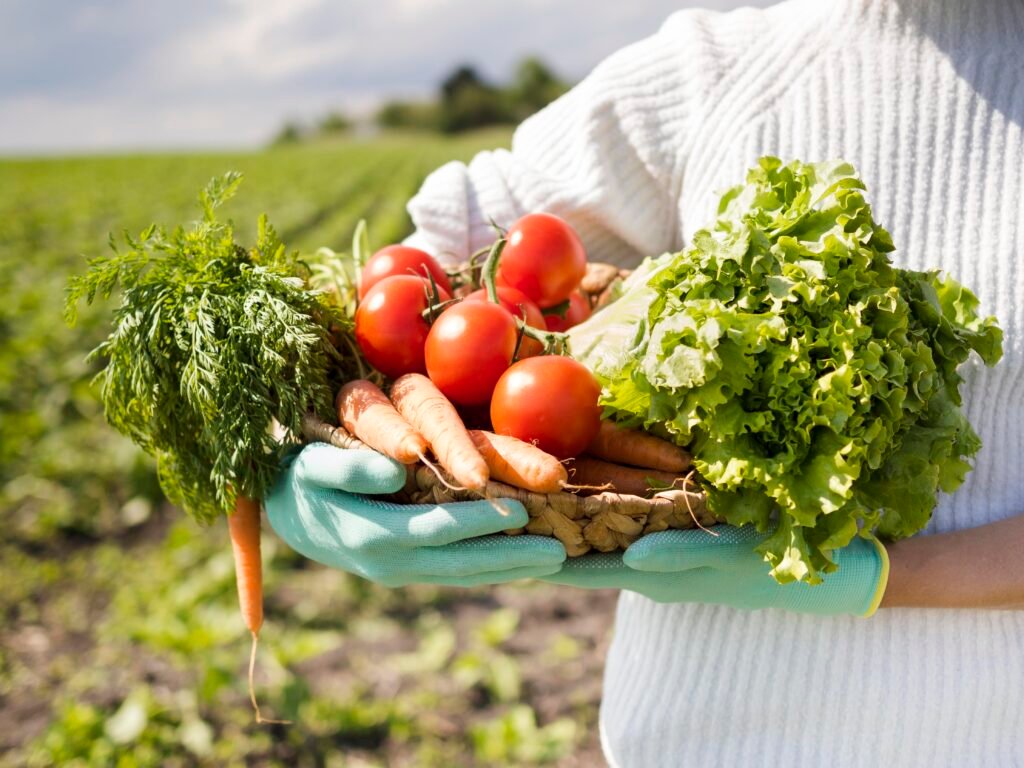
Healthier Produce
Crops grown without chemicals are rich in nutrients. They are fresher and taste better too. As a result, more families prefer organic vegetables, fruits, and grains
For detailed insights on organic certification, check the FAO guide on organic farming.
Better Soil Quality
Using compost and natural fertilizers improves soil structure. Over time, this makes land more productive. Therefore, organic farming is sustainable for years to come.
Lower Production Costs
Although organic farming may seem costly at the start, it saves money in the long run. Farmers don’t need to spend on expensive chemical fertilizers and pesticides.
Related Read: Learn how E-Commerce & Online Retail is transforming the way organic produce reaches customers.
Also Read: Explore our guide on Food Delivery & Cloud Kitchens to see how organic meals are delivered fresh.
Market Demand & Profitability
The organic food market is booming. Consumers are ready to pay a premium for safe and eco-friendly products. Hence, businesses can enjoy higher profits.
Environmental Protection
Organic methods reduce greenhouse gas emissions and pollution. In addition, they help conserve water and protect wildlife.

Challenges in Organic Farming and Solutions
High Initial Costs
Certification, training, and new tools can be costly.
Solution: Use government schemes and NGO funding to cut expenses.
Pest and Disease Control
Lack of chemicals makes crops vulnerable.
Solution: Apply natural methods like neem oil, crop rotation, and biocontrol.
Low Consumer Awareness
Many people don’t understand the value of organic food.
Solution: Promote through farmer markets, social media, and campaigns.
Lower Yield in Early Years
Organic crops may give less harvest at first.
Solution: Improve soil quality steadily; yields increase over time.
Complex Certification Process
Getting an organic label requires time and paperwork.
Solution: Work with local agricultural boards for guidance.
Future of Organic Farming Businesses
Government Support
Many countries are launching subsidies and awareness programs.
This will make organic farming more affordable.
Technology Integration
Use of drones, AI, and smart irrigation is improving yields.
Tech will make organic farming more efficient.
Global Market Expansion
Organic products are being exported worldwide.
Farmers and businesses can tap into international markets.
Sustainability Focus
Climate change is pushing for eco-friendly practices.
Organic farming will become a key part of sustainable living.

3 Comments
Pingback: Climate Change and Its Global Impact - arvupdate.com
Pingback: Home Décor Ideas to Transform Your Living Space - arvupdate.com
Pingback: Small Space, Big Style: Affordable Home Décor Hacks You’ll Love - arvupdate.com